Pintxøs: RSS without the clickbait
Here is a headline that showed up in my feed reader recently:
Netflix’s Renewed Sci-Fi Thriller With Perfect Rotten Tomatoes Score Officially Hits A Filming Milestone
Which thriller? What milestone?
Here is what it actually says:
Netflix’s Supacell completes season 2 filming
That’s it. That is in fact all the relevant information in that article. The original version is just clickbait.
I read most of my news through RSS (I mentioned NetNewsWire and Feedbin in the lens feed post a while ago). RSS is great because there is no recommendation algorithm between me and the sites I chose to follow. I just get a simple list of the articles that are published. But headlines themselves have gotten steadily worse in the last years. Clickbait and ragebait are everywhere, sometimes blatantly so, sometimes more subtle. I understand why they do it. Publisher want revenue and revenue is proportional to traffic. But that doesn’t make it any less annoying. And, I would wager, it’s arguably not a great strategy for long-term success.
So I built Pintxøs. It runs at home in a Docker container or you can run it as a local Python app. You give it the RSS feeds you already read, it fetches them, sends every article through Claude Haiku once to write a plain, factual headline and a short summary, and serves the result back as a clean RSS feed. You subscribe to that in your reader instead.
The result? Garbage in, sanity out.
If you read via an RSS reader, this might be for you. Pintxøs has no tracking, no accounts, but article contents are passed to Anthropic for processing of course. The code is on GitHub and published under an MIT license, the container is one docker compose up away. But you need to bring your own Anthropic API key.
The Name
Pintxos are the small, delicious bar snacks you get in the Basque country, a slice of bread with something on top, held together with a toothpick. I live in Spain; the association was hard to avoid. The tool takes an article and skewers it down to the one tasty little bite that matters. I liked the ø-spelling because it reminds me of Denmark and of a toothpick stuck straight through the o. Also, it’s silly. Works for me.
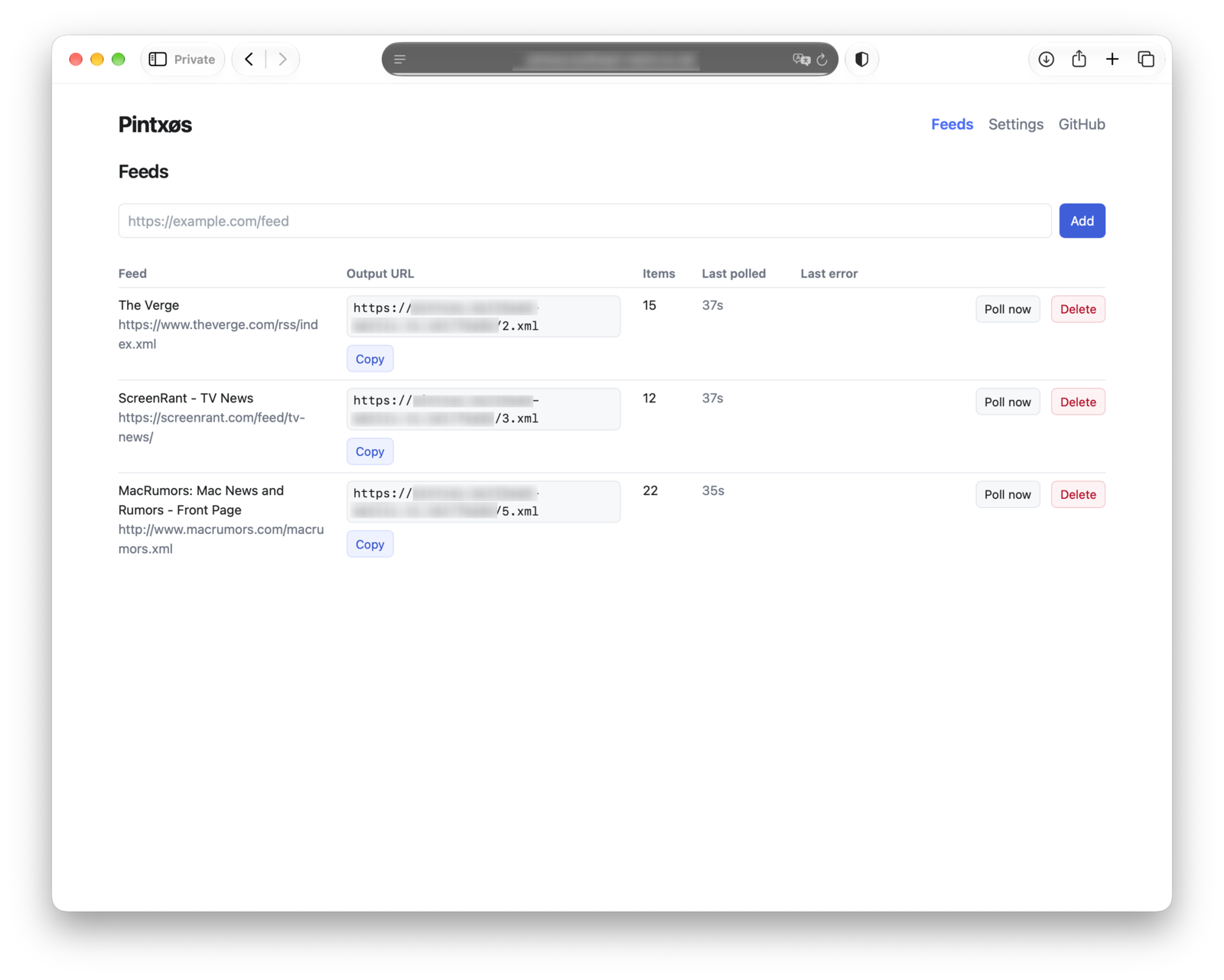
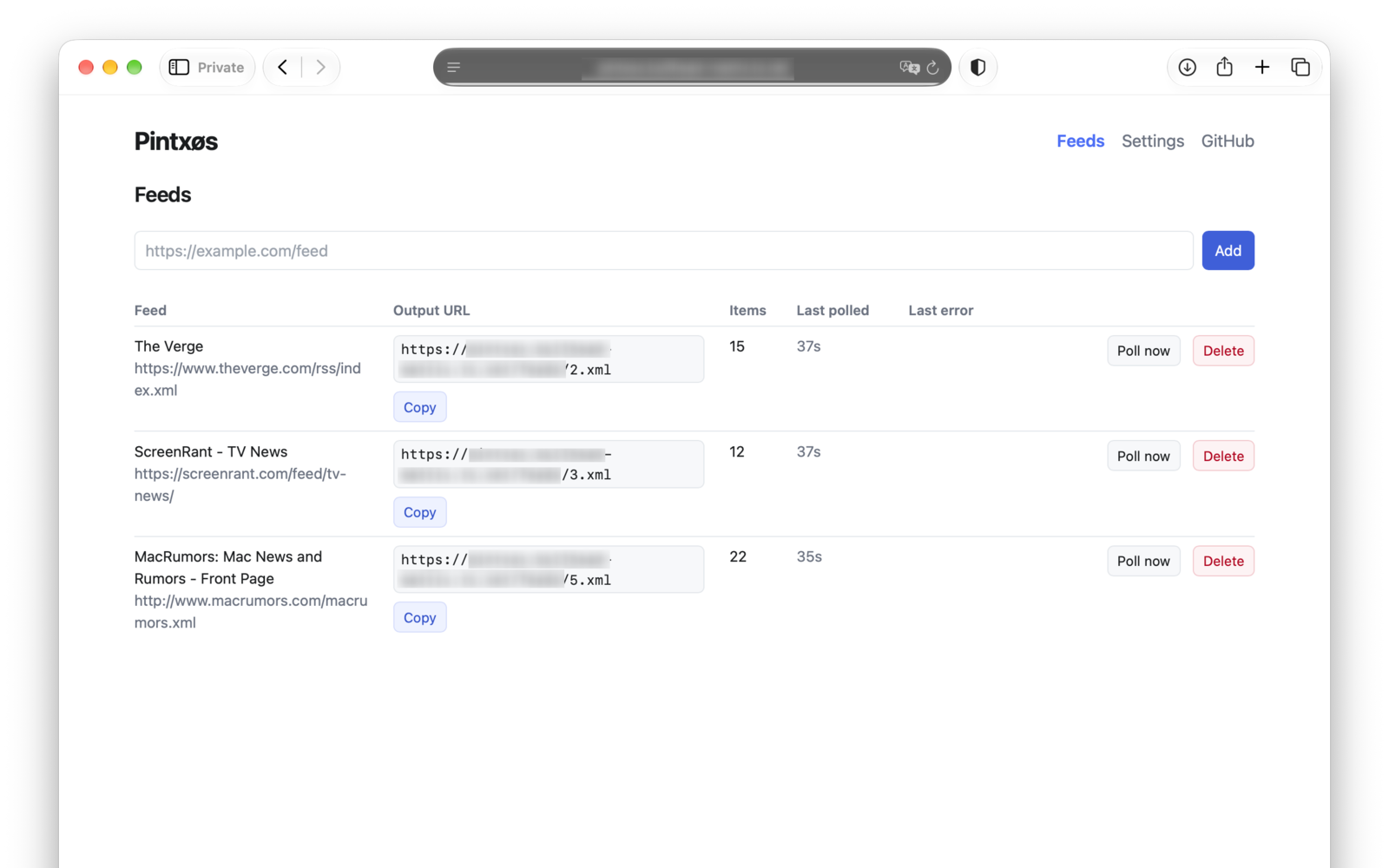
Using Pintxøs
How I use it in practice:
- I continue to subscribe to my feeds using NetNewsWire, synced through a Feedbin account, as usual.
- Any feed that starts to show headline and summary clickbait rot gets copied into Pintxøs and deleted from NetNewsWire.
- I then resubscribe to the nice, clean output of the same feed from Pintxøs in NetNewsWire
That’s it.
Other candidate feeds are those that publish long articles with high frequency. Even if they are not full of clickbait, it can still help to get shorter, more factual headlines and summaries.
What’s next? Two things I have on my list:
- Support for different providers and models. Claude Haiku works very well. But Anthropic’s API costs are still quite high in general. I want to experiment with other, cheaper models.
Adding keyword filters. Say you are subscribed to The Verge. Its feed contains a TON of articles every day. Maybe you already know that there are certain types of articles you just don’t want or need to see. It would be nice to filter out all articles containing certain key terms from the output feed Pintxøs provides.Update: this is already in :)-
More to come.
Disclosure: This post was created together with Claude: the working session wrote up its own notes, Claude drafted the post from them and my input, and I edited it heavily.